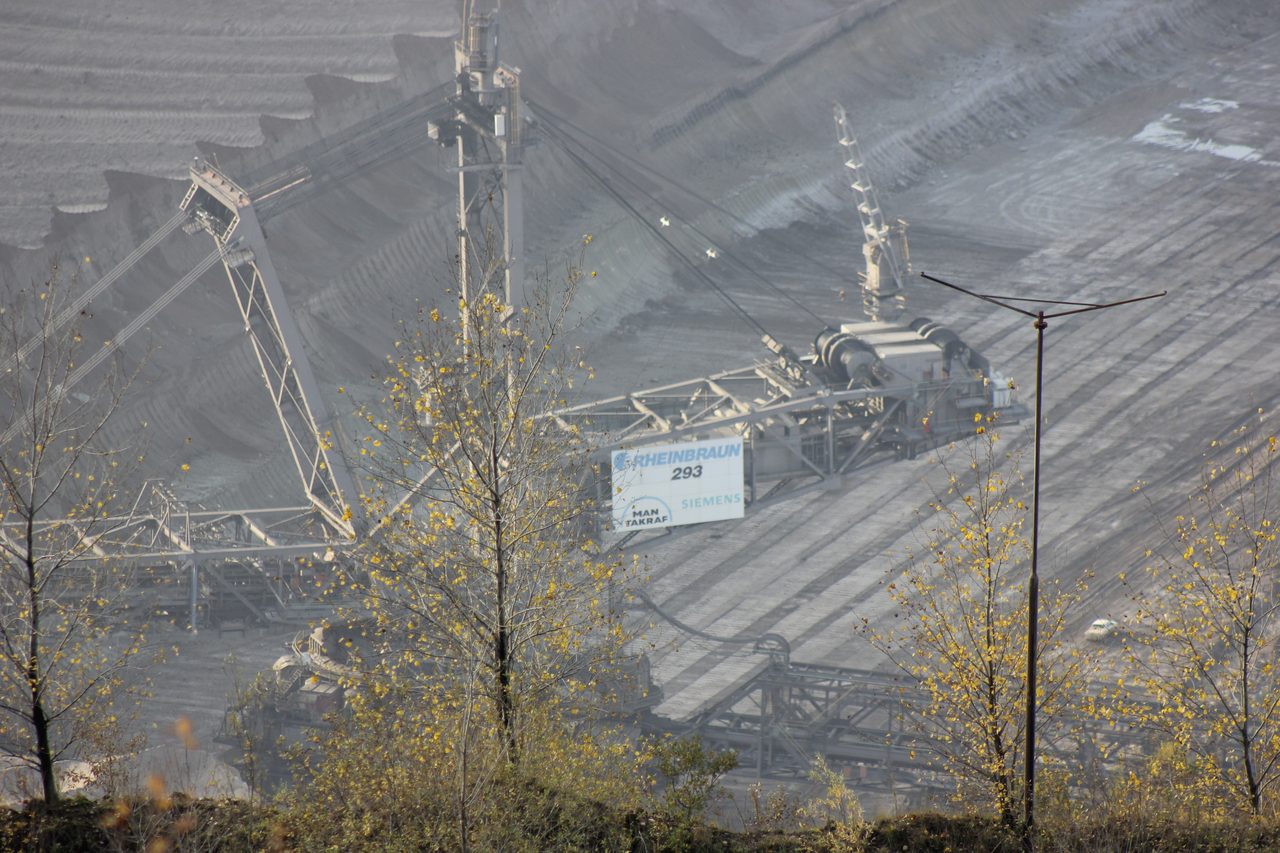
TAKRAF Bagger 293
A bucket wheel excavator recognised by Guinness World Records as the heaviest land vehicle ever built, and — tied with its near-sister Bagger 288 — the tallest.
Height: 96.0 m — about 53× an average adult's height (1.8 m). The machine is always drawn at the same size here; the human figure is what actually scales.
01Overview
A bucket wheel excavator recognised by Guinness World Records as the heaviest land vehicle ever built, and — tied with its near-sister Bagger 288 — the tallest.
02Purpose
Exists to strip overburden continuously, fast enough to keep pace with round-the-clock lignite extraction at a single German mine — a job cyclic excavators couldn't match.
03Historical Development
TAKRAF built Bagger 293 in Germany in 1995 as an evolution of the earlier Bagger 288, purpose-built to strip overburden fast enough to keep pace with coal extraction at the Hambach open-pit lignite mine. Both machines were designed around the same core insight: continuous bucket-wheel excavation moves far more material per hour than any cyclic (dig-swing-dump) excavator, at the cost of a machine so large it can only ever work one pit.
04Core Components
- Bucket wheelA rotating wheel over 21 metres across carrying 18 buckets, each able to hold over 15 cubic metres of material.
- Boom conveyorA belt conveyor running the length of the bucket-wheel boom, carrying excavated material back toward the machine's main body.
- Crawler undercarriageTwelve separate crawler tracks spreading the machine's 14,200-tonne weight across a wide enough footprint to avoid sinking into the pit floor.
- Counterweight boomA boom on the opposite side of the machine from the bucket wheel, balancing its enormous overhung weight.
05How It Works
Electric motors spin the bucket wheel continuously while the whole boom slowly swings sideways, letting each bucket scoop a shallow cut of material as it passes through the working face. Excavated material drops from each bucket onto the boom's internal conveyor the moment it clears the face, is carried back across the machine's body, and transferred onto a connecting conveyor system that can move overburden kilometres away without a single truck ever being loaded.
06Engineering Principles
The bucket wheel's drive motors run continuously against the resistance of cutting into a working face, needing sustained torque rather than a single peak force.
GearsGear RatiosThe wheel's drive train gears the electric motors' high running speed down to the wheel's much slower, high-torque cutting speed.
Power TransmissionBearingsEvery one of its twelve crawler tracks and the bucket wheel's own axle depend on bearings rated for a static load in the thousands of tonnes.
07Performance Characteristics
| Overall length | 225 m |
| Height | 96 m |
| Weight | 14,200 t |
| Bucket wheel diameter | 21.3 m |
| External power requirement | 16.56 MW |
08Notable Examples
- Hambach surface mine, GermanyBagger 293 has worked continuously at this single lignite mine since 1995, stripping overburden ahead of coal extraction.
09Interesting Facts
- At over 31 million pounds, Guinness World Records lists it as the heaviest land vehicle ever built.
- It moves on twelve separate crawler tracks — most excavators, however large, use only two.
- It draws 16.56 megawatts of external electric power, roughly enough to supply a small town, delivered continuously through cable rather than generated on board.