Bucyrus-Erie 4250-W “Big Muskie”
The largest walking dragline ever built — a single, one-off machine so large it needed its own specially built rail cars just to ship its components to the mine where it was assembled.
Overall standing height (the boom itself reached about 94 m): 68.0 m — about 38× an average adult's height (1.8 m). The machine is always drawn at the same size here; the human figure is what actually scales.
01Overview
The largest walking dragline ever built — a single, one-off machine so large it needed its own specially built rail cars just to ship its components to the mine where it was assembled.
02Purpose
Purpose-built for one site: stripping Ohio coal overburden faster than any smaller dragline could, at a scale no other machine of its kind has matched before or since.
03Historical Development
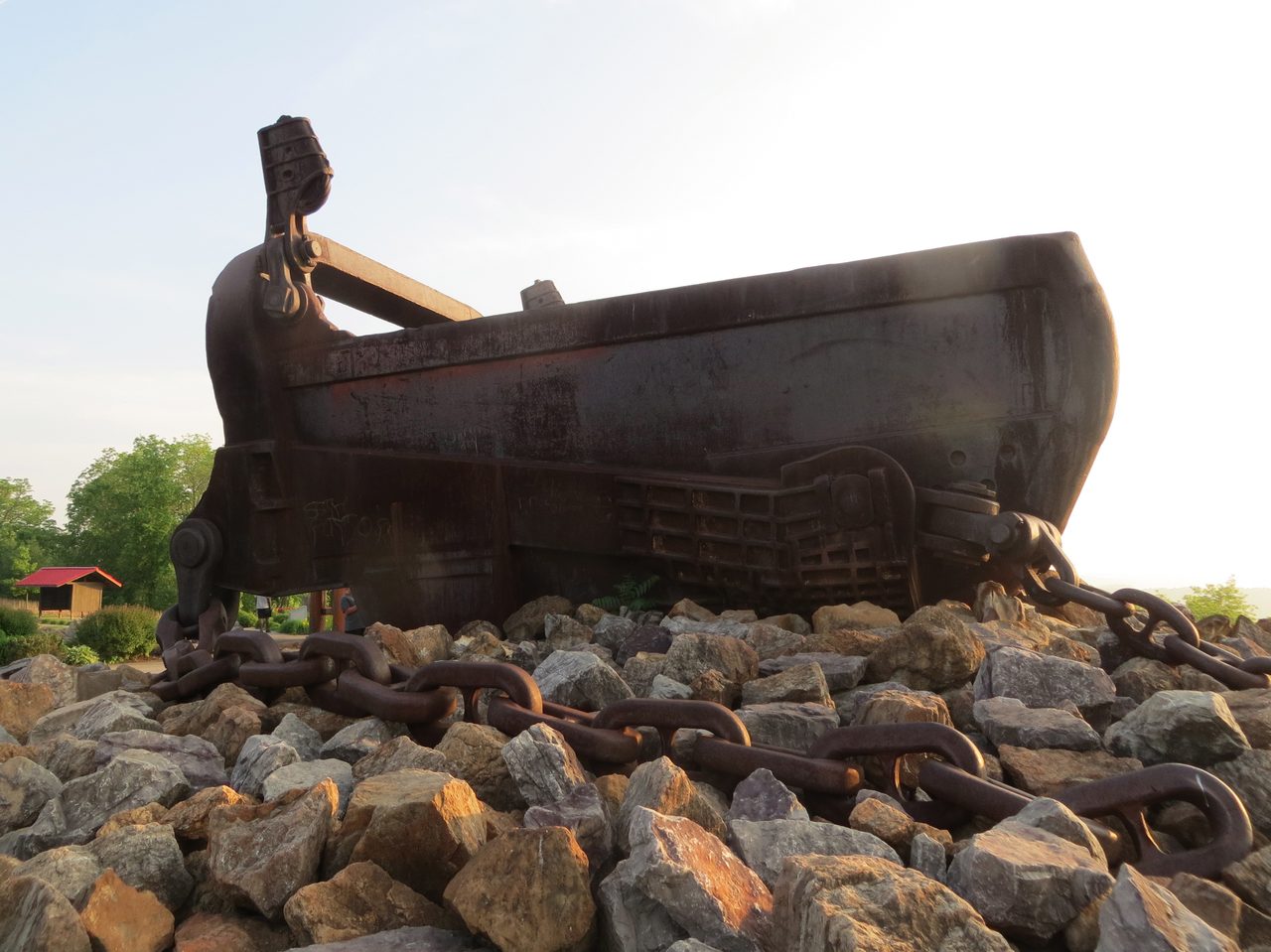
Bucyrus-Erie built the 4250-W, nicknamed Big Muskie, in 1969 for the Central Ohio Coal Company, as the single largest walking dragline the company ever produced and the only one of its exact model built. It worked Ohio coal country for over two decades before rising sulphur-regulation costs and reclamation-law changes made it uneconomical, and it was retired in 1991; only its bucket survives today, preserved as a monument.
04Core Components
- BoomA 310-foot lattice-steel boom from which the entire dragline bucket rig was suspended and swung.
- Bucket and dragline riggingA 220-cubic-yard bucket dragged across the ground by a hoist-and-drag wire-rope system, rather than pushed like an excavator's.
- Walking mechanismEnormous hydraulically actuated 'shoes' that let the entire machine lift itself and shuffle forward without conventional tracks or wheels.
- Electric hoist and drag motorsPowered from an external high-voltage supply rather than an onboard engine — dragines of this size are electric, not diesel, machines.
05How It Works
Big Muskie's operator swung the boom out over the material to be moved, then let the bucket fall and drag backward across the surface via the drag rope, scooping overburden into the bucket using the bucket's own weight and the drag motors' pull rather than any digging cylinder. The loaded bucket was then hoisted clear, the whole upper structure slewed around, and the load dumped onto a spoil pile — the same basic cycle every dragline in the world still uses, just at a scale no other machine has matched.
06Engineering Principles
The drag and hoist rigging is a wire-rope mechanical-advantage system, multiplying motor force through multiple rope falls exactly as a block and tackle does.
MechanicsTorqueThe hoist and drag motors needed sustained, enormous torque, not speed, to move a 220-cubic-yard bucket and its load through the drag cycle.
Power TransmissionBearingsThe machine's entire upper works rotated on a slew ring bearing sized for a rotating mass in the thousands of tonnes — one of the largest bearings ever built for a mobile machine.
07Performance Characteristics
| Bucket capacity | 220 yd³ (170 m³ / ~295 t of material) |
| Boom length | 310 ft (94 m) |
| Operating weight | ~13,000 t |
| Power source | External electric supply |
08Notable Examples
- Central Ohio Coal Company operationsBig Muskie's entire working life was spent removing overburden at a single coal complex in Ohio.
- Its bucket, Miner's Memorial Park, OhioThe only surviving component, preserved as a public monument after the rest of the machine was scrapped.
09Interesting Facts
- It was too large to move on public roads in one piece — its components arrived on specially built rail cars and it was assembled on site.
- A single bucket load, at 220 cubic yards, could have buried a small house.
- "Walking" draglines like this one move by lifting their whole base on giant shoes and shuffling forward a few feet at a time — they have no wheels or tracks at all.