Spartacus (Cutter Suction Dredger)
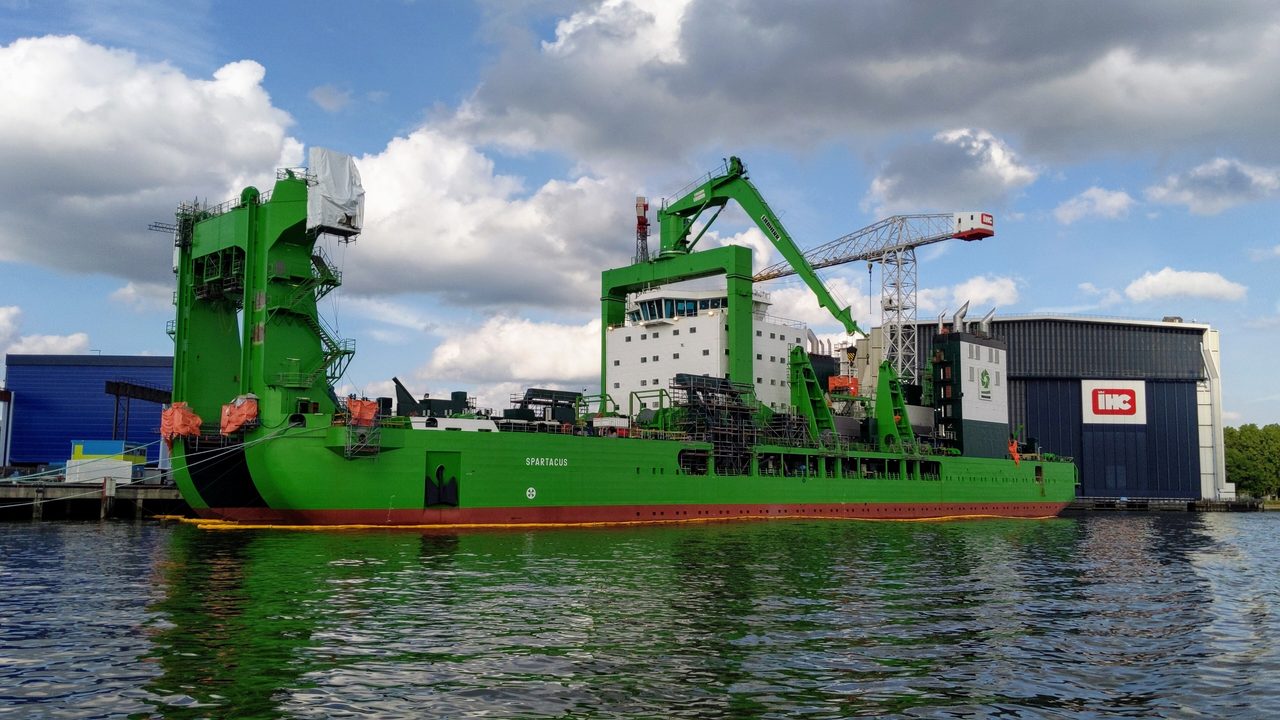
The most powerful cutter suction dredger ever built, and the first in the world powered by LNG, engineered to cut through harder seabed material at greater depth than any dredger before it.
Moulded depth, hull only (keel to main deck; masts and gantry above deck add more but aren't documented): 10.0 m — about 5.6× an average adult's height (1.8 m). The machine is always drawn at the same size here; the human figure is what actually scales.
01Overview
The most powerful cutter suction dredger ever built, and the first in the world powered by LNG, engineered to cut through harder seabed material at greater depth than any dredger before it.
02Purpose
Exists to cut through harder seabed material at greater depth than any dredger before it, while running on a fuel — LNG — nothing else in its class used yet.
03Historical Development
Belgian dredging contractor DEME commissioned Spartacus from Dutch shipbuilder Royal IHC specifically to reach seabed material at depths and hardness beyond what the existing dredging fleet could economically handle, delivered in 2019 as, at the time, the most powerful cutter suction dredger in the world. Its LNG propulsion was a deliberate first for the class, aimed at cutting emissions from a vessel that otherwise burns enormous amounts of fuel continuously during operation.
04Core Components
- CutterheadA rotating, toothed cutting wheel at the end of a ladder that breaks up seabed material, from soft silt to hard rock, ahead of suction.
- Suction and discharge pumpsHigh-capacity pumps that draw the cut material, mixed with water, up through the suction pipe and discharge it via pipeline to its placement site.
- LadderThe structure lowering the cutterhead to the working depth, engineered here to reach 45 metres — significantly deeper than most cutter suction dredgers.
- Onboard maintenance workshopA vibration-insulated workshop that lets crews service and repair cutterheads during operations, without returning to port.
05How It Works
The cutterhead, lowered on its ladder to the seabed, rotates and swings side to side across the working face, its teeth breaking up material from soft sediment up to hard rock. Powerful suction pumps immediately draw the loosened material, mixed with water into a slurry, up through the suction pipe, and discharge pumps push that slurry through a pipeline — sometimes kilometres long — to wherever it's being placed, whether that's a land reclamation site or a disposal ground. Spartacus's exceptional installed power lets it maintain cutting speed through harder material and at greater depth than dredgers with less power available at the cutterhead.
06Engineering Principles
The cutterhead drive must sustain very high torque cutting into hard seabed rock, the underwater equivalent of a tunnel boring machine's cutterhead demands.
Power TransmissionBearingsThe cutterhead's drive shaft and the ladder's pivot both rely on bearings sealed against constant seawater immersion, one of the harshest bearing environments of any machine on this site.
HydraulicsHydraulic CylindersLadder raising and lowering, along with several onboard handling systems, are hydraulically actuated.
07Performance Characteristics
| Total installed power | 44,180 kW |
| Length | 164 m |
| Max dredging depth | 45 m |
| Propulsion | LNG-fuelled |
08Notable Examples
- Land reclamation and deepening projects worldwideSpartacus is deployed on projects specifically requiring depth or seabed hardness beyond older dredgers' practical limits.
09Interesting Facts
- Before Spartacus, the practical depth limit for most cutter suction dredgers was around 35 metres — Spartacus pushed that to 45.
- It was the world's first LNG-powered cutter suction dredger, a fuel choice aimed squarely at reducing the vessel's substantial continuous emissions.
- Its onboard workshop lets a damaged cutterhead be repaired at sea, avoiding the costly transit back to port that would otherwise idle a vessel this expensive.